Deepfake Scams Unmasked: The Tactics Fraudsters Use and How to Spot Them
From fake celebrity investment videos to cloned voices and fake executives on video calls, deepfakes have become a core scam tool. Learn how these scams work, the warning signs, and how individuals and businesses can protect themselves.

In this article
- Key takeaways
- What makes a deepfake scam different
- The building blocks
- The five main scammer tactics
- 1. Fake celebrity and official endorsements
- 2. AI investment platforms with guaranteed returns
- 3. Executive impersonation on video calls
- 4. Voice-cloned emergencies
- 5. Romance and persona scams
- Warning signs: how to spot a deepfake
- Visual clues in video
- Clues in images
- Behavioural clues, the most reliable of all
- Why deepfake scams are spreading now
- How to protect yourself
- For individuals and families
- For businesses and finance teams
- What to do if you are targeted or scammed
- Frequently asked questions
- Can deepfakes happen on a live video call?
- Are there apps that can detect deepfakes reliably?
- Why do scammers use famous Nigerians?
- Is it a crime to make deepfakes for fraud?
- What you should do
- Sources
A few years ago, seeing someone speak on video was strong proof that they had really said those words. That is no longer true. Deepfakes, AI-generated video, images and audio that make a real person appear to say or do things they never did, are now cheap to produce and convincing enough to fool careful people. Scammers have noticed. This explainer is for everyday internet users, investors, finance teams and business owners in Nigeria and across Africa. It unmasks the tactics fraudsters use, walks through real cases, and gives you practical habits that work even when your eyes and ears cannot be trusted.
Key takeaways
- Deepfake scams rely on borrowed trust: the face or voice of someone you already believe, such as a celebrity, official, boss or relative.
- In Nigeria, fake videos of public figures have promoted bogus investments and health cures, and the SEC has warned about AI-driven investment scams.
- In one of the largest known cases, a finance worker at engineering firm Arup sent about US$25 million after a video call with deepfaked colleagues.
- Visual glitches can help, but the most reliable defence is verifying through a separate, trusted channel before you pay or share anything.
- Urgency, secrecy and guaranteed returns are the red flags that appear in almost every case.
What makes a deepfake scam different
Traditional fraud asks you to trust a stranger. Deepfake fraud skips that step by impersonating someone you already trust. Africa Check notes that scammers target celebrities and public officials precisely because they seem credible, and that realistic AI tools make fake content faster to produce and harder to spot. The result is that the usual instinct, “I saw it with my own eyes”, now works in the criminal’s favour.

The building blocks
- Face swapping and lip-syncing to put new words in a real person’s mouth.
- Voice cloning from short clips taken from social media, interviews or voice notes.
- AI-generated images to build entirely fake personas for romance or investment scams.
- Distribution through trusted channels, such as sponsored Facebook ads, Instagram reels, Telegram groups and forwarded WhatsApp messages.
The five main scammer tactics
1. Fake celebrity and official endorsements
This is the most common form in Nigeria. Africa Check documented a video using the likeness of health creator Aproko Doctor and actor Taiwo Ajai-Lycett to promote a supposed hypertension cure. In January 2026, business executive Ibukun Awosika publicly debunked AI videos that appeared to show her promoting an investment platform, and in February 2026 WTO Director-General Ngozi Okonjo-Iweala warned about an AI video that appeared to promote a non-existent investment opportunity.
2. AI investment platforms with guaranteed returns
In September 2025, Nigeria’s Securities and Exchange Commission warned of a rising wave of AI-driven investment scams promising guaranteed profits. The SEC said fraudsters were using deepfake videos of politicians, celebrities and TV hosts to fabricate endorsements and testimonials, and that the platforms involved were not registered or regulated by the Commission.
3. Executive impersonation on video calls
The Arup case shows how far this can go. According to CNN’s reporting, a finance employee in the firm’s Hong Kong office first suspected a phishing email from the UK office asking for a secret transaction. His doubts faded after a video call with people who looked and sounded like the chief financial officer and other colleagues. All of them were deepfakes. He made 15 transfers totalling about HK$200 million, roughly US$25.6 million. Arup reported the fraud to police in January 2024 and confirmed it was the victim in May 2024.
4. Voice-cloned emergencies
PayPal’s fraud guidance describes calls that sound exactly like a loved one in trouble, demanding an immediate transfer. Because many Nigerians share voice notes freely on WhatsApp, there is plenty of material for cloning. The same trick can target businesses, with a “manager” calling to approve an urgent payment.
5. Romance and persona scams
AI-generated photos and short clips create attractive, consistent fake identities. After weeks of building trust, an invented crisis leads to a request for money, gift cards or crypto.
Warning signs: how to spot a deepfake
Visual clues in video
- Unnatural blinking, stiff head movement or a smile that does not reach the eyes.
- Lip movements that do not match the audio.
- Blurry edges around the face, mismatched shadows, or waxy, overly smooth skin.
- Very short, low-resolution clips, which hide these flaws.
Clues in images
- Warped background lines, blurry patches or oddly shaped hands.
- Mismatched earrings, uneven ears, asymmetric glasses, or hair that blends into the background.
Behavioural clues, the most reliable of all
- Urgency: you must act now, before checking with anyone.
- Secrecy: do not tell colleagues, family or the bank.
- Unusual payment routes: new bank accounts, crypto wallets or gift cards.
- Guaranteed or daily profits, often with celebrity backing.
- Platforms that live only on Telegram or WhatsApp, with no verifiable office address.
Technology is improving quickly, so do not rely on spotting glitches alone. A perfect-looking video that asks for money urgently is still a red flag.
Why deepfake scams are spreading now
Several trends have come together to make deepfakes a mainstream fraud tool rather than a novelty.
- Cheaper, easier tools. Producing a convincing fake once required specialist skills and computing power. Today, as Africa Check observes, realistic AI tools make fake content faster to create and more convincing.
- Plenty of raw material. Public figures appear in countless interviews and videos, and ordinary people post selfies, reels and voice notes daily. Every clip is potential training data.
- Paid reach. The SEC noted that manipulated videos circulate through Facebook ads, Instagram reels and Telegram groups, which lets scammers target large audiences quickly.
- Profit from attention. Rasheed Adeniyi of Fountain University told Africa Check that scammers use celebrity identities to drive traffic and earn money, not only to steal directly.
- Remote work habits. Teams that approve payments over chat and video calls give impersonators an opening, as the Arup case showed.
None of these trends is slowing, so it is safer to assume that any face or voice can be faked and build habits around that.
How to protect yourself
For individuals and families
- Verify through a second channel. If a relative calls asking for money, hang up and call them back on the number you already have, or contact someone who is with them.
- Agree a family safe word that a caller must know before any emergency transfer.
- Check investments with the SEC. Confirm that a platform is a registered Capital Market Operator and that its registration number matches the SEC’s records.
- Confirm endorsements on the person’s official website or verified social media pages.
- Run a reverse image search on profile photos used by new online contacts.
- Never share your BVN, ATM PIN, banking passwords or card details, however convincing the request.
- Limit public voice and video where practical, and set social media accounts to private.
For businesses and finance teams
- No payment on a call alone. Any urgent or unusual transfer must be confirmed through a known phone number or in person, even if the request comes from the CEO on video.
- Use dual approval for large payments and for any change to supplier bank details.
- Set verification questions for leaders that would not be found online.
- Train staff with real examples, such as the Arup case, so they feel empowered to pause and check, even with senior managers.
- Protect executives’ accounts with strong MFA, because a compromised email often sets up the deepfake call.
- Monitor for impersonation of your brand and leaders on social media, and report fake ads quickly.
What to do if you are targeted or scammed
- Stop all contact. Do not send more money or information, even if they promise a refund.
- Call your bank immediately using the number on your card or official app, and ask them to try to stop or recall the transfer.
- Save evidence: screenshots of videos, profiles, messages, account numbers and transaction receipts.
- Report it to the Economic and Financial Crimes Commission (EFCC) or the Nigeria Police Force’s cybercrime unit, and to the SEC if an investment platform was involved.
- Report the content to the platform where you saw it so it can be taken down before it catches others.
- Warn others in your family or company groups, as scammers often reuse the same video.
Frequently asked questions
Can deepfakes happen on a live video call?
Yes. The Arup case involved a live video call with several fake participants. Treat any payment request on a call as unverified until you confirm it separately.
Are there apps that can detect deepfakes reliably?
Detection tools exist, but none are perfect and fakes keep improving. Verification habits are more dependable than any single tool.
Why do scammers use famous Nigerians?
Because their faces and voices carry trust. A fake endorsement from a respected business leader or doctor makes a bogus offer look safe.
Is it a crime to make deepfakes for fraud?
Using fake content to deceive people into handing over money is fraud. Report it to the authorities and the platform.
What you should do
- Treat any video, voice note or call that asks for money or secrets as unverified until you confirm it through a trusted channel.
- Check every investment with the SEC, no matter who appears to endorse it.
- Agree a safe word with family and a call-back rule with your finance team today.
- Share this guide with older relatives and staff who handle payments, the people scammers target most.
Sources
- CNN via ABC17: Arup revealed as US$25 million deepfake scam victim
- Africa Check: Scam trends to watch out for in 2026
- AllAfrica: SEC raises alarm over AI-generated investment scams
- PayPal: How to identify deepfake videos and fraudulent investment schemes
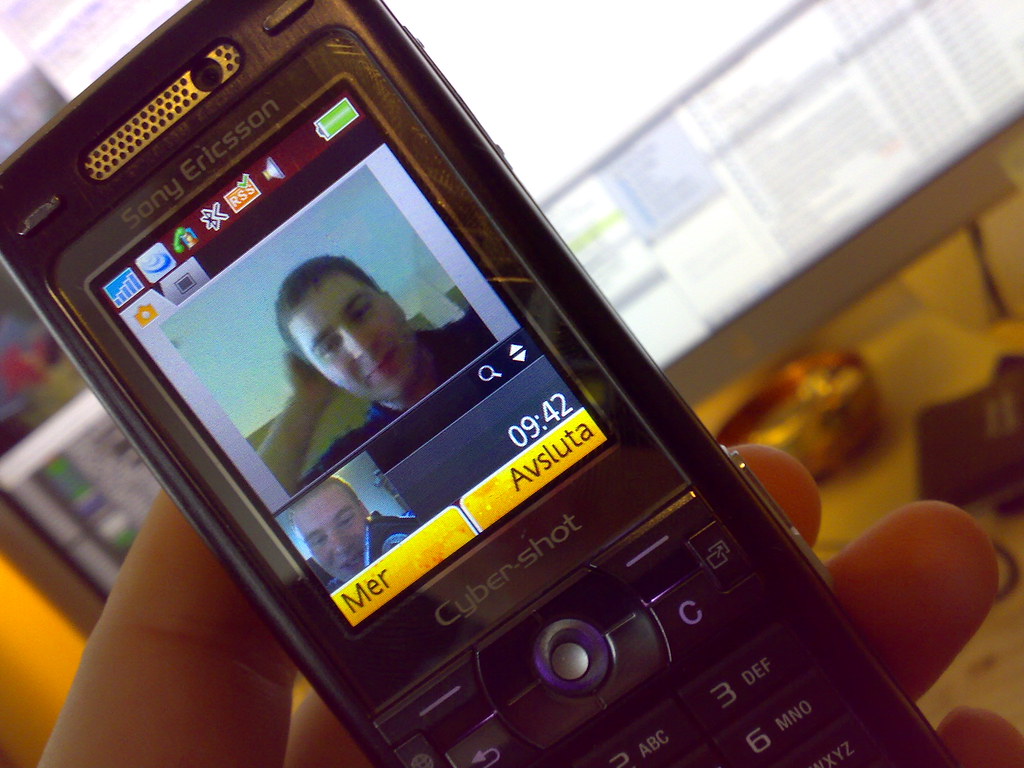
Featured image: Photo: “video call to mroach” by kalleboo, CC BY 2.0, via Openverse — source
Have you come across this scam?
Was this article helpful?

adminVerified expert
Cybersecurity Analyst — 20 years experience
Federal Capital Territory (Abuja)
Credentials: MCPN, MNCS, IAENG | System Analyst · Web Developer · CEH · CC · CDST
Got expertise to share? Write for us →