Can a Selfie Leak Your Fingerprints? The Real Risk Explained
Researchers and TV demonstrations have shown that fingerprints can sometimes be recovered from photos of raised fingers. Here is how selfie-based fingerprint extraction works, how real the risk is, and how to protect your biometrics.


In this article
- Key takeaways
- Where the warning came from
- The 2017 Japanese research
- Earlier proof-of-concept cases
- The 2026 revival
- How selfie-based fingerprint extraction works
- Why AI changes the picture
- How big is the risk, really?
- For most ordinary users: low
- For public figures and high-value targets: higher
- The bigger everyday threats
- Why it still matters
- How to protect your fingerprints without giving up selfies
- When taking and sharing photos
- When setting up devices and accounts
- Extra steps for public figures
- What organisations that use fingerprints should consider
- A short checklist for SMEs
- Frequently asked questions
- Should I stop making the peace sign in photos?
- Can someone unlock my phone with a photo of my finger?
- Is face unlock safer?
- What should I do if I think my fingerprints were copied?
- What you should do
- Sources
The two-finger “peace” or “V” sign is one of the most popular poses in photos around the world, including on Nigerian Instagram, TikTok and WhatsApp statuses. Over the past few years, security researchers and media demonstrations have raised an uncomfortable question: can someone lift your fingerprints from that photo and use them against you? This explainer is for everyday social media users, parents, and business owners who rely on fingerprint login for phones, banking apps and office access. It separates what has been shown to work from what is exaggerated, and explains sensible ways to protect yourself without giving up selfies.
Key takeaways
- Fingerprint extraction from photos is technically possible, but it needs a sharp, well-lit, high-resolution image with fingertips facing the camera.
- Japanese researchers recovered usable fingerprint detail from photos taken up to about 3 metres away; Chinese experts say the risk is highest within about 1.5 metres.
- Turning an image into a working fake finger takes extra effort, so experts rate the everyday risk to ordinary users as low, but higher for public figures.
- Unlike a password, a fingerprint cannot be changed, so it is worth limiting how much of it you publish.
- The best defence is layering: do not rely on a fingerprint alone for high-value accounts.
Where the warning came from
The 2017 Japanese research
The modern concern dates to January 2017, when Japan’s National Institute of Informatics (NII) reported that it had read fingerprint details from photos taken about three metres from the subject. Professor Isao Echizen warned that biometric information such as fingerprints cannot be changed over a lifetime, which makes leaks more serious than password leaks. Fact-checkers at Snopes later pointed out that the original Japanese reporting focused on NII’s work to prevent fingerprint theft, including a transparent film designed to mask prints in photos, and that English-language headlines made the threat sound more immediate than the researchers suggested.

Earlier proof-of-concept cases
In 2014, a German hacker known as Starbug reportedly replicated a senior politician’s fingerprint using publicly taken press photos, and researchers at the Kraken cryptocurrency exchange built a usable print from a photo of one left on a surface. Both were targeted demonstrations involving specialist effort, not mass attacks on ordinary people.
The 2026 revival
The topic returned in 2026. A mainland Chinese reality programme showed a financial expert, Li Chang, using photo-editing software and AI tools on a celebrity selfie to make fingerprint ridges visible. Reports in the South China Morning Post and Korean media in May 2026 quoted his estimate that fingerprints could be extracted relatively clearly when fingertips face the camera within about 1.5 metres, and that roughly half of the detail could still be recovered at 1.5 to 3 metres. Local media also reported a case in Hangzhou where criminals allegedly tried to open a smart door lock using a hand photo the homeowner had posted online.
How selfie-based fingerprint extraction works
An attacker would need to complete several steps, and each one is a hurdle.
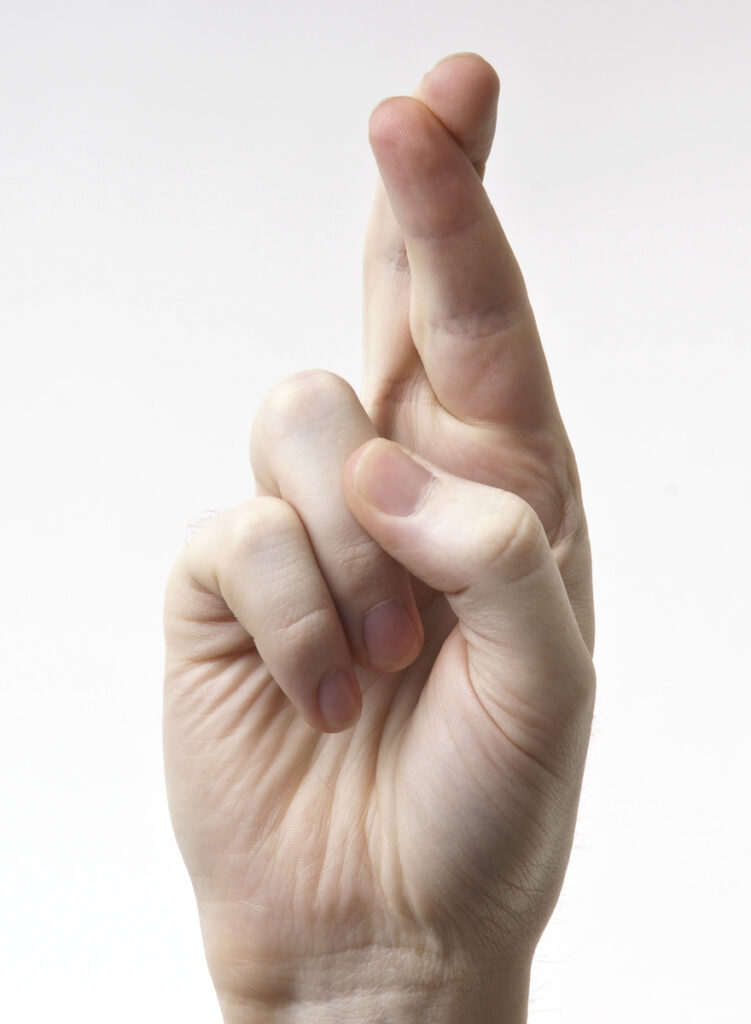
- Find a suitable image. The fingertips must be in focus, well lit and pointing straight at the lens. Most casual photos fail this test.
- Isolate and enhance the ridges. Image-processing and AI tools sharpen the fine ridge lines and remove blur and noise. More pixels and multiple photos of the same person make this easier.
- Rebuild the print. The enhanced pattern is converted into a fingerprint image that resembles what a sensor would capture.
- Make a physical copy. To fool a sensor, the print usually has to be reproduced in a material such as gelatin or silicone to create a fake fingertip.
- Get access to the target device. A fake finger is only useful if the attacker can physically reach your phone, door lock or terminal.
Why AI changes the picture
Modern smartphone cameras capture far more detail than those of a decade ago, and AI enhancement tools are cheaper and easier to use. Experts quoted by the South China Morning Post said the risk rises with higher-resolution cameras or when criminals collect multiple related images. However, Pei Zhiyong of the Qianxin Industry Security Research Centre stressed that reconstruction only works when lighting, focus, distance and image quality all line up, so not every selfie is a risk.
How big is the risk, really?
For most ordinary users: low
A June 2026 fact check by Malaysia’s The Star rated the claim “true, but” with important caveats. NYU professor Justin Cappos told the paper that the average person is more likely to be hit by a car than to have a fingerprint lifted from a social media photo. Carnegie Mellon professor Vyas Sekar said the scenario is possible in theory, especially with high-resolution images, but sounds closer to a spy novel than everyday crime. Echizen himself noted that people leave physical fingerprints on surfaces every day, which can be easier to copy than a photo.
For public figures and high-value targets: higher
Celebrities, politicians, executives and influencers appear in thousands of high-quality photos, many taken by professional photographers. That makes them better targets, and the 2014 demonstrations show attackers are willing to put in the work for valuable individuals.
The bigger everyday threats
Security experts consistently point out that phishing, account takeover, SIM swap fraud and AI voice-cloning scams cause far more harm to ordinary people. Protecting your biometrics is sensible, but it should sit alongside, not replace, basic account security.
Why it still matters
- Permanence. You can change a leaked password in minutes. You cannot replace your fingerprints.
- Growing reliance on biometrics. Fingerprints now unlock phones, approve banking app transactions, open smart locks and clock staff in at work.
- Images last forever. A photo you post today may be analysed with better tools years from now.
- Context for Nigeria. Biometrics are widely used for identity checks such as NIN and BVN enrolment, and many people use fingerprint unlock on phones that also hold banking apps. Treating biometric data with the same care as a PIN is good practice.
How to protect your fingerprints without giving up selfies
When taking and sharing photos
- Avoid close-up shots where your fingertips face the camera directly. Turn your hand so the back faces the lens, or keep fingers slightly curled.
- Be more careful with very high-resolution or professional photos, which carry more detail.
- Limit who can see your photos by using privacy settings on Instagram, Facebook and WhatsApp status.
- Think twice before posting many photos of your hands in the same pose; multiple images help an attacker.
When setting up devices and accounts
- Do not rely on a fingerprint alone for high-value actions. Combine biometrics with a strong PIN or passcode, and keep transaction PINs for banking apps.
- Avoid enrolling your fingerprints on devices or locks you do not fully trust, as experts quoted in Korean media advised.
- Keep phone software updated so you benefit from the manufacturer’s latest sensor and anti-spoofing improvements.
- For businesses, require a second factor for sensitive systems instead of fingerprint-only entry.
Extra steps for public figures
- Ask photographers and social media managers to avoid publishing close-ups of fingertips.
- Use stronger authentication, such as hardware security keys, for critical accounts.
- Review smart lock and access systems to make sure a fingerprint is not the only way in.
What organisations that use fingerprints should consider
Banks, fintechs, schools, hospitals and offices that use fingerprint readers for staff attendance or customer verification should treat this research as a reminder to design for failure. A fingerprint is best used to confirm that the right person is present, not as the only secret protecting money or data.
A short checklist for SMEs
- Map every system where a fingerprint alone grants access, from door locks to payment approvals.
- Add a second factor, such as a PIN, card or one-time code, for anything involving payments or sensitive records.
- Store biometric templates securely, limit who can export them, and include biometric data in your data protection policies.
- Train staff not to post photos of access terminals or their hands on scanners on social media.
Researchers are also working on countermeasures. Japan’s NII, for example, developed a transparent film for fingertips intended to hide ridge detail in photos while still allowing verification, showing that the response to this risk is as much about design as about personal habits.
Frequently asked questions
Should I stop making the peace sign in photos?
No. Simply angle your hand so the fingertips do not face the camera in close-up shots. The risk from a normal group photo taken at a distance is very low.
Can someone unlock my phone with a photo of my finger?
Not directly. They would typically need to enhance the image, create a physical replica and then get hold of your phone. That is why combining biometrics with a PIN adds strong protection.
Is face unlock safer?
Faces are even more visible online than fingertips. Whatever biometric you use, treat it as convenient rather than secret, and back it with a PIN or passcode for important accounts.
What should I do if I think my fingerprints were copied?
Remove fingerprint login from sensitive apps, switch to a strong PIN or passkey, alert your bank and review account activity.
What you should do
- Angle your hands away from the camera in close-up selfies, especially high-resolution ones.
- Tighten privacy settings on platforms where you share personal photos.
- Pair fingerprint unlock with a strong PIN, and never use fingerprint alone to protect money or sensitive data.
- Keep devices updated and only enrol fingerprints on trusted hardware.
- Focus equal energy on bigger daily risks: phishing, SIM swap and voice-cloning scams.
Sources
- The Star: QuickCheck – Can criminals use AI to steal your fingerprints from your online photos?
- South China Morning Post: China TV show exposes peace-sign selfie privacy risks
- Daum News: Experts warn of fingerprint theft from hand-sign photos
- Snopes: Hackers and peace-sign fingerprints
- Identity Week: Security experts say peace-sign selfies are a fingerprint risk
Featured image: Photo: “Peace Sign” by Indy Trendy Skits, CC BY 2.0, via Openverse — source
Was this article helpful?

adminVerified expert
Cybersecurity Analyst — 20 years experience
Federal Capital Territory (Abuja)
Credentials: MCPN, MNCS, IAENG | System Analyst · Web Developer · CEH · CC · CDST
Got expertise to share? Write for us →