Scam Alert: Bank Texts Linking to Cloned Online Banking Sites
Bank PR officers are warning Nigerians about texts that impersonate several banks and lead to cloned internet banking sites that steal logins, BVNs, card details and PINs. Here is how the scam works and how to stay safe.

In this article
A text message arrives saying your bank account needs to be “verified”, “reactivated” or “secured” before it is restricted. It carries your bank’s name and a link. The page that opens looks exactly like your bank’s internet banking login. It is not. It is a cloned website built to collect everything a criminal needs to empty your account.
The Association of Corporate Communication and Marketing Professionals in Banks (ACAMB), which represents communications officers across Nigerian banks, has warned customers about this wave of fake bank messages. This alert explains how the scam works, the signs to look for, and what to do if you have already clicked.
Key takeaways
- Fact-checking group FactCheckAfrica debunked a text that impersonated several Nigerian banks and linked to a cloned internet banking site.
- The fake site harvests login details, BVNs, card details and transaction PINs.
- ACAMB says no Nigerian bank will ask for your PIN, password, OTP or BVN through a link.
- Experts warn that AI-cloned voices and fake videos are making bank impersonation harder to spot, so slow down and verify every unexpected request.
How the scam works, step by step
- The bait: you receive an SMS or chat message that appears to come from your bank, or from “your bank” without naming one. It claims there is a problem with your account and urges you to act quickly.
- The link: the message includes a link. It may look official at a glance but leads to a website controlled by the fraudsters.
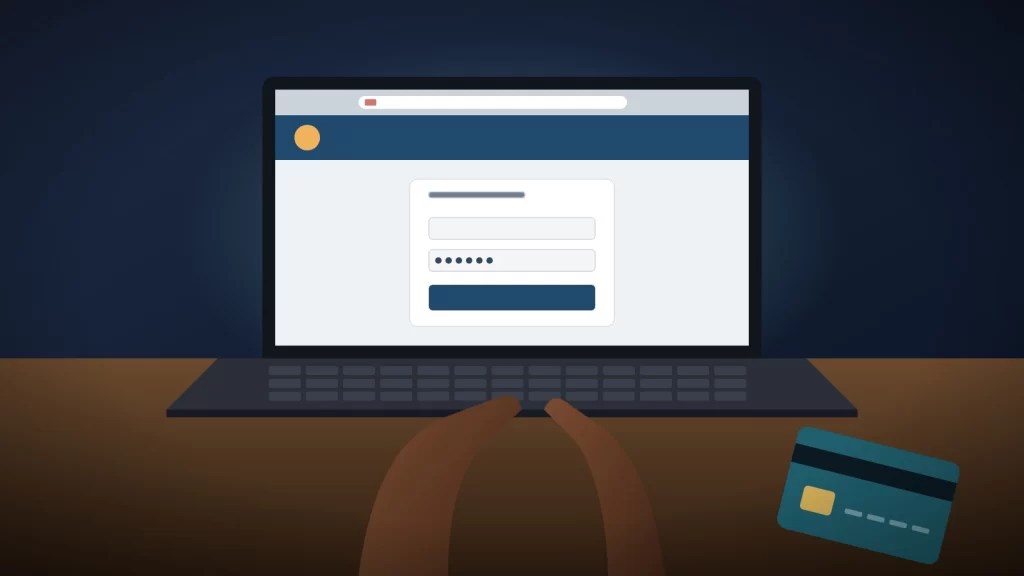
- The clone: the site copies your bank’s colours, logo and login page.
- The harvest: you are asked to sign in, then to “confirm” your BVN, card number, expiry date and CVV, and your transaction PIN. Some versions also ask for the OTP sent to your phone.
- The theft: with these details, the criminals can log in to your account, approve transfers or make card payments. Money can move through several accounts within minutes, which makes recovery difficult.
Why this wave is harder to spot
Impersonation is everywhere
Bank impersonation is not limited to text messages. ACAMB noted that in June, Wema Bank suspended its activity on X after more than 70 fake accounts impersonated the bank and its ALAT platform. Fake “customer care” profiles often reply to genuine complaints on social media and then send victims to the same kind of cloned pages.
AI is raising the stakes
In a BusinessDay interview published on 25 November, Samuel Ubido, executive chairman of Techinnovate Group, warned that AI-powered impersonation, including cloned voices, manipulated videos and convincing fake identities, could become Nigeria’s biggest banking fraud threat in 2027. His point is that criminals no longer need to break into bank systems. They persuade customers, or bank staff, to approve payments themselves, so the bank sees what looks like a normal transaction. He cited a doctored video of Aliko Dangote used in a January 2026 investment scam, which Africa Check debunked and the Dangote Group confirmed was fake.
The lesson is simple: a familiar voice, logo or face is no longer proof that a request is genuine.
Warning signs to watch for
- A message that asks you to “verify”, “reactivate”, “update” or “secure” your account through a link.
- Urgency or threats, such as “your account will be blocked today”.
- Any request for your PIN, password, OTP, CVV or BVN. Banks do not ask for these through links.
- A web address that is misspelled, uses an unusual ending, or does not match the address you normally type for your bank.
- A message that does not name a specific bank, or that could apply to customers of several banks.
- A caller, voice note or video from someone claiming to be a bank official, celebrity or senior manager who pushes you to approve a payment or share a code.
How to protect yourself
- Do not click links in unsolicited messages about your bank account, even if the message looks official.
- Go direct: open your bank’s official app, or type its web address yourself. Use the customer service numbers printed on your card or on the bank’s official website and verified social media pages.
- Never share your PIN, password, OTP, CVV or BVN with anyone, by phone, chat or web form.
- Pause, verify, report: ACAMB’s advice is to stop before acting, confirm with the bank through an official channel, and report anything suspicious.
- Turn on transaction alerts and set sensible transfer limits in your banking app so unusual activity is easier to spot and harder to exploit.
- For businesses: agree an internal rule that any payment request received by phone, voice note or video call must be confirmed through a second, known channel before money moves.
What to do if you are a victim
- Call your bank immediately using the number on your card or its official website. Ask them to block your card, restrict your account and flag any recent transfers.
- Change your internet banking password and PIN from the official app or website, on a device you trust.
- Check your account history and write down the time, amount and recipient of every transfer you did not make.
- Keep evidence: screenshot the text message, the fake website address and any chat with the fraudsters.
- Report the incident to your bank in writing, and to the Nigeria Police Force’s cybercrime unit or the EFCC. If your bank does not resolve your complaint, you can escalate it to the CBN’s consumer protection channels.
What you should do
Treat every message that asks you to act on your bank account through a link as a scam until proven otherwise. Share this alert with family members, especially older relatives and those new to mobile banking, and remind your staff that no genuine bank will ever ask for a PIN, OTP or BVN through a link.
Sources
- Vanguard: ACAMB advises bank customers against phishing scams
- BusinessDay: AI impersonation could become Nigeria’s biggest banking fraud threat in 2027
Featured image: Photo: “mobile phone mast” by osde8info, CC BY-SA 2.0, via Openverse — source
Have you come across this scam?
Was this article helpful?

adminVerified expert
Cybersecurity Analyst
Federal Capital Territory (Abuja)
Credentials: MCPN, MNCS, IAENG | System Analyst · Web Developer · CEH · CC · CDST
Got expertise to share? Write for us →