Scam Alert: Fake Police ‘Digital Arrest’ Video Calls Demanding Money
After raids on West African scam compounds, here is how fake police 'digital arrest' and investment scams work, the warning signs, and what to do if you are targeted.

In this article
A phone rings, or a video call starts. Someone in what looks like a police uniform says you are linked to money laundering, drug trafficking or a fraud case. You are told you are now under “digital arrest”, must stay on camera, must not tell anyone, and can clear your name only by paying. Every part of that is a lie. This alert explains how the scam works, why it is in the news now, and what to do if the call comes to you or someone you love.
Why this scam is in the news now
In October 2026, a coordinated international operation called Joint Disruption Week targeted scam networks in West Africa. It was hosted by the UK’s National Crime Agency and brought together 15 law enforcement agencies and 15 technology companies, including Meta, Microsoft and Google, with crypto exchange Binance also taking part.
According to reporting on the operation:
- Police in Ghana raided a compound outside Accra, arrested 19 people and seized 303 devices. Nine further arrests were made in Nigeria, for 28 in total.
- 117 people were identified as suspected victims of human trafficking and were awaiting repatriation to Nigeria. Some scam centres recruit and train workers, sometimes trafficked people, to run the fraud.
- Investigators identified 89 scam victims who had lost an estimated 8.3 million US dollars, and more than 11 million dollars in funds that could potentially be frozen.
- The US Department of Justice said the networks ran law enforcement impersonation scams, fake “digital arrest” extortion, and crypto investment fraud.
The operation is good news, but arrests do not end a scam model. Similar groups are still active, and the scripts they use can target anyone with a phone.

How the “digital arrest” scam works, step by step
- The accusation. You receive an unexpected call, WhatsApp message or video call. The caller claims to be from the police, an anti-fraud agency, customs or a bank’s security team, and says your name, bank account or ID has been linked to a serious crime.
- The fake authority. They may wear a uniform, sit in front of an official-looking backdrop, show a “warrant” or ID card, and quote your real name or phone number to seem credible.
- The isolation. You are ordered to stay on the call, keep your camera on and not hang up. You are told that telling family or a lawyer will make things worse.
- The pressure. Calls can last hours. You may be asked to show your room to “prove” you will not run.
- The payment. You are told to pay a “bail”, a “verification fee” or to move your savings into a “safe account” while the case is investigated. Payment is often by bank transfer, crypto or gift cards.
- The disappearance. Once you pay, the caller vanishes, or comes back for more.
The investment version
The same networks also run fake investment schemes. A friendly contact, often met on social media, introduces you to a trading platform showing big returns. Small early withdrawals may work, then larger sums are trapped behind “taxes” or “unlock fees”. Binance’s advice after the operation was simple: genuine investment platforms will not rush you to move your crypto.
Warning signs
- An unexpected call or video call from someone claiming to be police or another official agency.
- Threats of immediate arrest if you end the call.
- Being kept on a call for a long time and told not to speak to anyone.
- Any demand for money to “prove your innocence”, pay bail or protect your account.
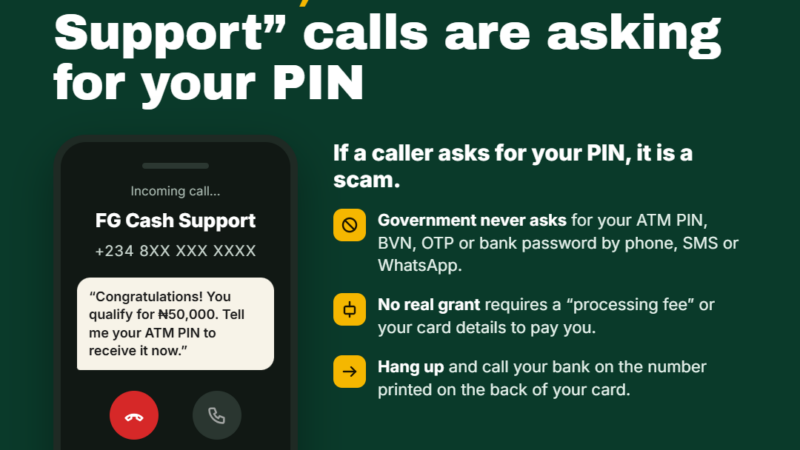
- Requests for your BVN, NIN, card details, PINs or one-time passwords.
- Pressure to install an app or share your screen.
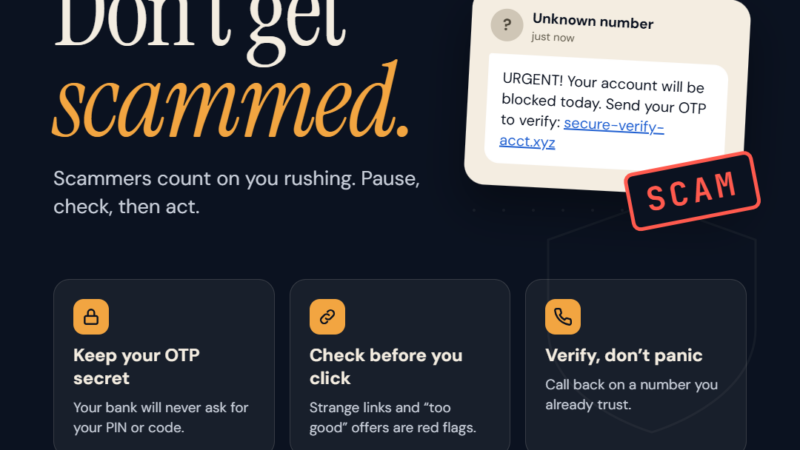
- Promised investment returns that sound too good to be true, with urgent deadlines.
How to protect yourself and your team
Remember the golden rule
No genuine police force or anti-fraud agency arrests anyone over a video call, and none will ask you to pay money over the phone to avoid arrest. Real legal processes involve formal documents and in-person procedures, and you are entitled to speak to a lawyer and your family.
Practical steps
- Hang up. You never have to stay on a call that threatens you.
- Verify independently. If you are worried, contact the agency using a phone number or address from its official website, not one the caller gives you.
- Talk to someone you trust before sending any money. Scammers rely on secrecy.
- Never share your BVN, NIN, card details, PIN or OTP with a caller.
- Do not install apps or share your screen on instruction from an unknown caller.
- Brief your staff and family, especially older relatives and young job seekers, who are often targeted.
- Never lend your bank account, BVN or SIM to anyone. Mule accounts are how these networks move stolen money.
For businesses
- Set a rule that no payment is made because of a phone call alone, whoever the caller claims to be.
- Require two people to approve unusual transfers.
- Tell staff that management will never be offended if they hang up and call back on a known number.
Be wary of fake job offers abroad
The trafficking side of this story matters too. Scam compounds need workers, and some people are lured with job offers that turn into forced work running scams. Be careful with overseas or “remote” job offers that come through social media, promise high pay for little experience, or ask you to travel quickly without a proper contract. Verify the employer independently before you travel or pay any fee.
What you should do if you have been targeted
- Stop all contact and do not send any more money, even if threatened.
- Call your bank immediately using the number on the back of your card or its official app, and ask it to block transfers and try to recall funds.
- Save evidence: phone numbers, usernames, screenshots, call logs and payment receipts.
- Report it to the police and to the EFCC through their official channels. If crypto was involved, report the transaction to the exchange’s support team through its official app or website.
- Change passwords and PINs if you shared any details, and watch your accounts closely.
- Warn others. Sharing what happened helps protect friends and colleagues, and there is no shame in being targeted by professional criminals.
Sources
- The Record: West African scam compounds raided, more than 100 suspected trafficking victims rescued
- AllAfrica/Capital FM: Binance Disrupts West African Scam Centres in International Operation
- Razorpay: Digital arrest scam explained
- INTERPOL: Major operation in Africa targeting online scams nets 651 arrests
Have you come across this scam?
Was this article helpful?

adminVerified expert
Cybersecurity Analyst — 20 years experience
Federal Capital Territory (Abuja)
Credentials: MCPN, MNCS, IAENG | System Analyst · Web Developer · CEH · CC · CDST
Got expertise to share? Write for us →