CBN Payment Data Localisation: What Changes on 1 January 2027
From 1 January 2027, payment data generated in Nigeria must be stored and managed in Nigeria. Here is what the CBN rule covers, who is affected, and how fintechs, merchants and IT providers should prepare.

In this article
- What the rule says
- It covers more than storage
- Cloud is allowed, with conditions
- Readiness is patchy
- Infrastructure: capacity is there, but concentrated
- Other payment rules arriving at the same time
- What it means for SMEs and IT providers
- For merchants and small businesses
- For local tech firms
- What you should do
- Sources
In about six weeks, one of the biggest IT changes in Nigeria’s financial sector takes effect. From 1 January 2027, the Central Bank of Nigeria (CBN) requires payment transaction data generated in Nigeria to be stored and managed in Nigeria. For banks, fintechs, switches and payment processors that lean on foreign cloud regions, that means real infrastructure work, and fast.
This piece is for IT leaders at financial institutions, fintech founders, and the cloud, data centre and cybersecurity firms that serve them. Merchants and SMEs that use payment services will also find out what may change for them.
What the rule says
The directive came in a circular from the CBN’s Payments System Supervision Department, signed by its director, Rakiya Yusuf, BusinessDay reports. It is addressed to deposit money banks, microfinance banks, mobile money operators, switching companies, payment terminal and payment solution service providers, super agents and other licensed payment operators. Its core instruction is that all institutions facilitating payments in Nigeria must ensure payment transaction data generated here are stored and managed here, in line with Nigerian data protection laws.
The CBN linked the move to the rapid growth of electronic payments and to concerns about market concentration, operational dependence, ownership transparency and critical financial data sitting outside Nigeria’s jurisdiction.
It covers more than storage
On 4 November 2026 the CBN published a clarification, an updated FAQ, that widens the practical scope. According to THEWILL’s reading of it, localisation covers not just transaction records but also:
- Processing systems
- Backups, replicated databases and archives
- Disaster recovery arrangements
- Security logs
- Administrative systems used to manage the data
That matters for IT teams. An app whose main database is in Lagos but whose backups, logging platform or disaster recovery site sit in Europe may still fall short.
Cloud is allowed, with conditions
The CBN permits public, private, hybrid and multi-cloud setups as long as they meet the localisation rules, and it has not told institutions to use any particular provider. Third-party providers are allowed, but the financial institution stays responsible for compliance. Providers must meet applicable Nigerian Communications Commission certification and NITDA supervision requirements, and the CBN has not designated any approved list. Institutions must be able to document where data is stored and processed, how providers access it, what contracts cover and how they would recover after a disruption.
Readiness is patchy
A survey presented at a CBN-NITDA regulatory dialogue in Lagos on 28 October found that 26 of 44 responding financial institutions had finished the work or expected to finish before the deadline. Fifteen said completion was unlikely or very unlikely. With the festive season and year-end freezes ahead, the real working time left is shorter than the calendar suggests.
Infrastructure: capacity is there, but concentrated
Local options already exist. THEWILL lists Rack Centre’s carrier-neutral Lagos campus with 13.5MW of IT power, MTN Nigeria’s Tier III Dabengwa facility in Ikeja with 4.5MW initially, and Galaxy Backbone’s Tier III centre in Abuja and Tier IV facility in Kano, alongside Open Access Data Centres and Equinix.
The weak points are geography and power. The CBN’s clarification puts more than 75% of Nigeria’s data centres in Lagos and flags unreliable power and uneven distribution as challenges. A bank that puts its primary and backup systems in the same city has not really solved its disaster recovery problem.
Other payment rules arriving at the same time
The same circular includes competition and transparency measures, BusinessDay reports:
- Institutions must keep up-to-date records of ultimate beneficial owners and share them with the CBN on request.
- Any firm with more than 25% of card issuing over a rolling 12 months may hold no more than 15% of merchant acquiring, and the reverse also applies.
- Monthly market share reports are required, with full compliance on market structure due by 31 December 2026.
What it means for SMEs and IT providers
For merchants and small businesses
Most small businesses do not need to do anything directly, because the rule applies to licensed payment institutions. But expect possible notices from your payment provider about service changes or migration windows. If you run a platform that holds payment data on behalf of a licensed partner, ask that partner what they need from you.
For local tech firms
THEWILL notes the deadline creates demand for cloud migration, system integration, encryption, access control, threat monitoring, security testing and disaster recovery services. Providers will need to prove their facilities and processes meet the requirements, not just that they are located in Nigeria.
What you should do
- Map your data flows now: list every system that touches Nigerian payment data, including backups, logs, analytics and support tools.
- Flag anything offshore and decide whether to move it, replace it or restrict what data it receives.
- Check providers’ credentials against NCC and NITDA requirements, and get data location and access commitments in writing.
- Design real disaster recovery with geographically separate sites and tested failover, accounting for power reliability.
- Migrate carefully. Plan cut-overs that avoid peak trading periods such as the December rush, and keep security controls in place during the move.
- Document everything so you can show the CBN where data lives and how you would recover.
Sources
- THEWILL: CBN’s New Data Rules Put Nigeria’s Cloud, Data Centre Firms In Line For More Business
- BusinessDay: CBN ends offshore payment processing as banks, fintechs face 2027 data localisation deadline
- CBN: FAQ on Data Localisation (updated 4 November 2026)
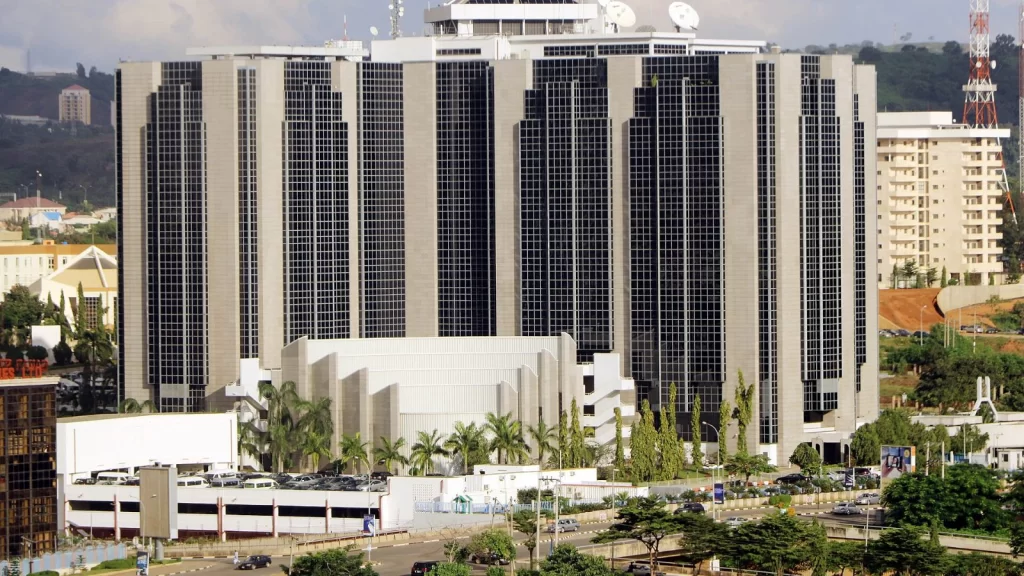
Featured image: Photo: “Central Bank of Nigeria” by GodwinPaya, CC BY-SA 4.0, via Wikimedia Commons — source
Was this article helpful?

adminVerified expert
Cybersecurity Analyst
Federal Capital Territory (Abuja)
Credentials: MCPN, MNCS, IAENG | System Analyst · Web Developer · CEH · CC · CDST
Got expertise to share? Write for us →