Scam Alert: Sextortion Gangs Use Fake Profiles and AI-Made Nudes
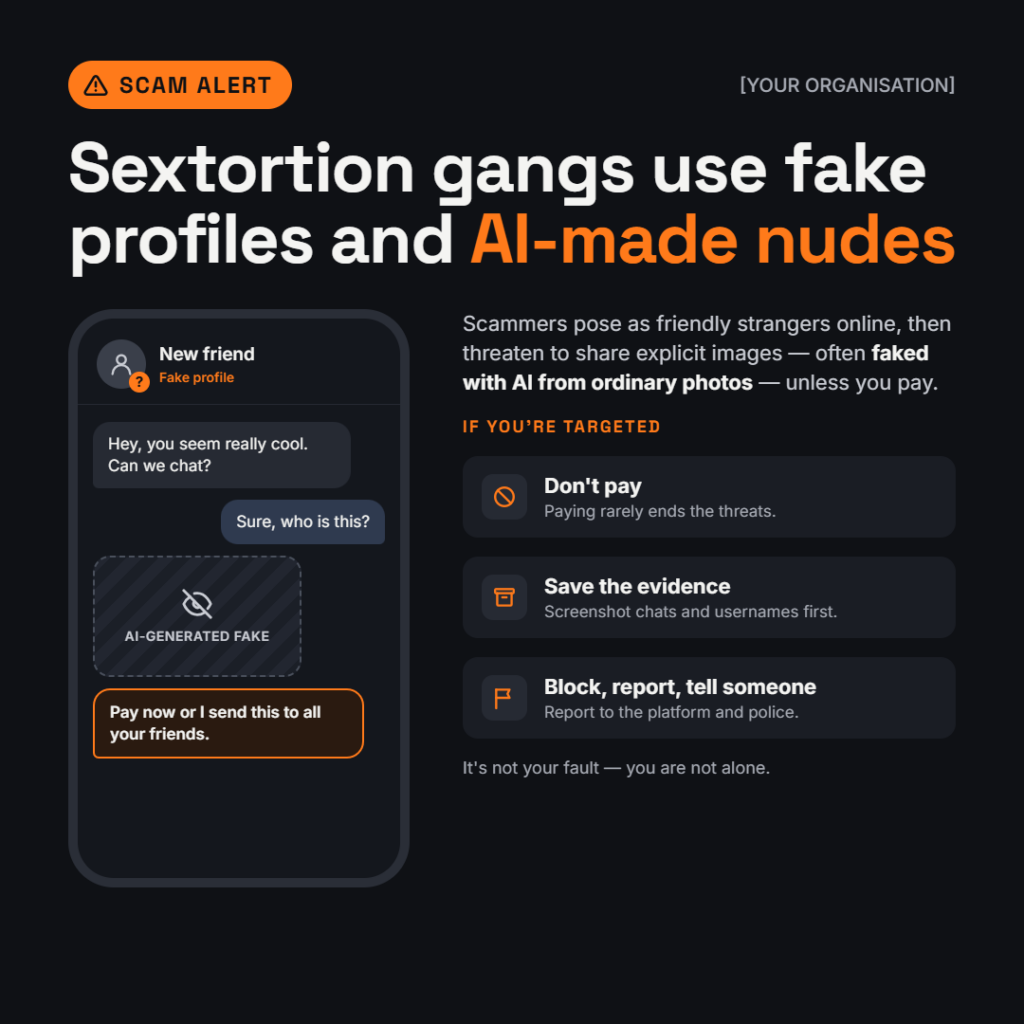
NITDA, the EFCC and NAPTIP have all warned about online sextortion, where criminals threaten to release intimate images, real or AI-generated, unless victims pay. Here is how it works and how to respond.

In this article
Three Nigerian agencies have raised the alarm about the same crime within a few weeks. In early October, NITDA’s Computer Emergency Readiness and Response Team (CERRT) warned about rising sextortion, including cases built on AI-generated explicit images. On 13 October the EFCC chairman warned young women about criminals exploiting relationships and intimate videos. And on 5 November, NAPTIP told a joint security briefing in Abuja that online sextortion and fake job adverts are being linked to organised fraud networks.
This alert is for parents, teachers, young people and adults of any age. Sextortion targets everyone, and the shame it relies on is what keeps victims silent. Knowing how it works takes much of that power away.
Key takeaways
- Sextortion is online blackmail: a criminal threatens to share intimate images or videos unless you pay, send more images or meet other demands.
- Criminals no longer need a real intimate picture. AI tools can create convincing fake explicit images from ordinary photos.
- Paying rarely ends it. Demands usually continue.
- Do not pay, save the evidence, stop replying, and report to the platform and the Nigeria Police Force Cybercrime Unit.
How the scam works, step by step
1. The approach
According to NITDA, contact usually begins on social media, messaging apps, dating platforms or online games. NAPTIP added that criminals also approach people in real-world social spaces such as gyms, posing as friendly helpers to get a phone number. International agencies have long described offenders creating fake profiles that pretend to be someone of a similar age.
2. Building trust fast
Conversations move quickly into personal and emotional territory, often late at night. NAPTIP specifically flagged late-night messaging as a tactic. The aim is to make the victim feel close to the other person within days.
3. Getting the material
The criminal persuades the victim to share an intimate photo or video, sometimes by sending one first. The EFCC notes material may also be recorded without consent or obtained through deception. In the newer AI variant, criminals take ordinary photos from a victim’s social media profile and generate fake explicit images, so the victim may never have shared anything at all.
4. The threat
Then the tone changes. The criminal shows screenshots of the victim’s friends, family or colleagues and threatens to send them the images unless money is paid, often within minutes or hours. NAPTIP said criminals also stage sudden “emergencies” to extort money.
5. The cycle
NITDA warns that complying does not necessarily end the threats. Each payment shows the criminal that the victim will pay again.
Warning signs
- A stranger, or a new online friend you have never met in person, who becomes affectionate very quickly.
- Pressure to move from a public platform to a private chat app.
- Requests for photos, video calls in private settings, or “proof” of trust.
- Someone who sends you an explicit image first and asks you to return one.
- Late-night messages that push for secrecy.
- Any message showing your contact list or followers alongside a demand for money.
Why this matters in Nigeria
Financially motivated sextortion has drawn international attention to Nigeria. NITDA’s warning referenced FBI figures from April 2025 estimating nearly $65 million lost over two years to sextortion linked to Nigerian nationals, and noted Meta’s removal of about 63,000 Nigerian Instagram accounts in 2024 for attempted sextortion. But Nigerians are victims too. The EFCC says criminals are increasingly targeting young women, while NAPTIP described victims lured by fake online job adverts who suffered abuse, trauma and financial ruin. The EFCC also warned young people not to lend their bank accounts to fraudsters, since an “account mule” in your name can lead to prosecution.
How to protect yourself and your family
- Do not send intimate images online, even to someone you trust. NITDA notes you cannot always verify who controls an account.
- Lock down your social media. Make profiles private, limit who can see your friends list, and think twice about posting clear face photos publicly, since these can be misused by AI tools.
- Treat unverified job offers with suspicion, especially those that ask you to travel or meet privately.
- Talk to children and teenagers early. Tell them clearly that if anyone threatens them, they can come to you and will not be punished. Fear of getting in trouble is what criminals depend on.
- Never let anyone use your bank account to receive money.
What to do if you are being threatened
- Do not pay and do not send more images.
- Save the evidence first: screenshots of messages, usernames, profile links, payment requests and account numbers.
- Stop all communication and then block the account.
- Report the account and content to the platform where it happened. Major platforms have dedicated reporting options for intimate image abuse.
- Report to the Nigeria Police Force Cybercrime Unit, as NITDA advises. Trafficking-related cases can also be reported to NAPTIP.
- Tell someone you trust. You are the victim of a crime. If the stress becomes overwhelming, reach out to a counsellor or a trusted adult.
What you should do
Share this alert with your family group chat and with young people you know. Make a simple agreement at home: anyone who receives a threat tells someone immediately, and nobody pays. Criminals depend on panic and secrecy; a calm, quick report is the best defence.
Sources
- Nairametrics: NITDA warns Nigerians over rising sextortion threats, AI-generated explicit images
- Voice of Nigeria: NAPTIP warns Nigerians against online sextortion, job scams
- Sahara Reporters: EFCC warns Nigerian girls against criminals exploiting relationships
- Peoples Gazette: FBI issues global alert on sextortion
Featured image: Photo: “Smartphone” by Insights Unspoken, CC BY-SA 2.0, via Openverse — source
Have you come across this scam?
Was this article helpful?

adminVerified expert
Cybersecurity Analyst
Federal Capital Territory (Abuja)
Credentials: MCPN, MNCS, IAENG | System Analyst · Web Developer · CEH · CC · CDST
Got expertise to share? Write for us →